A whole-home mold inspection.
All inspections start outside to determine if water has a way in, feeding the mold. Then every accessible space inside the home is assessed, including attics and crawlspaces.
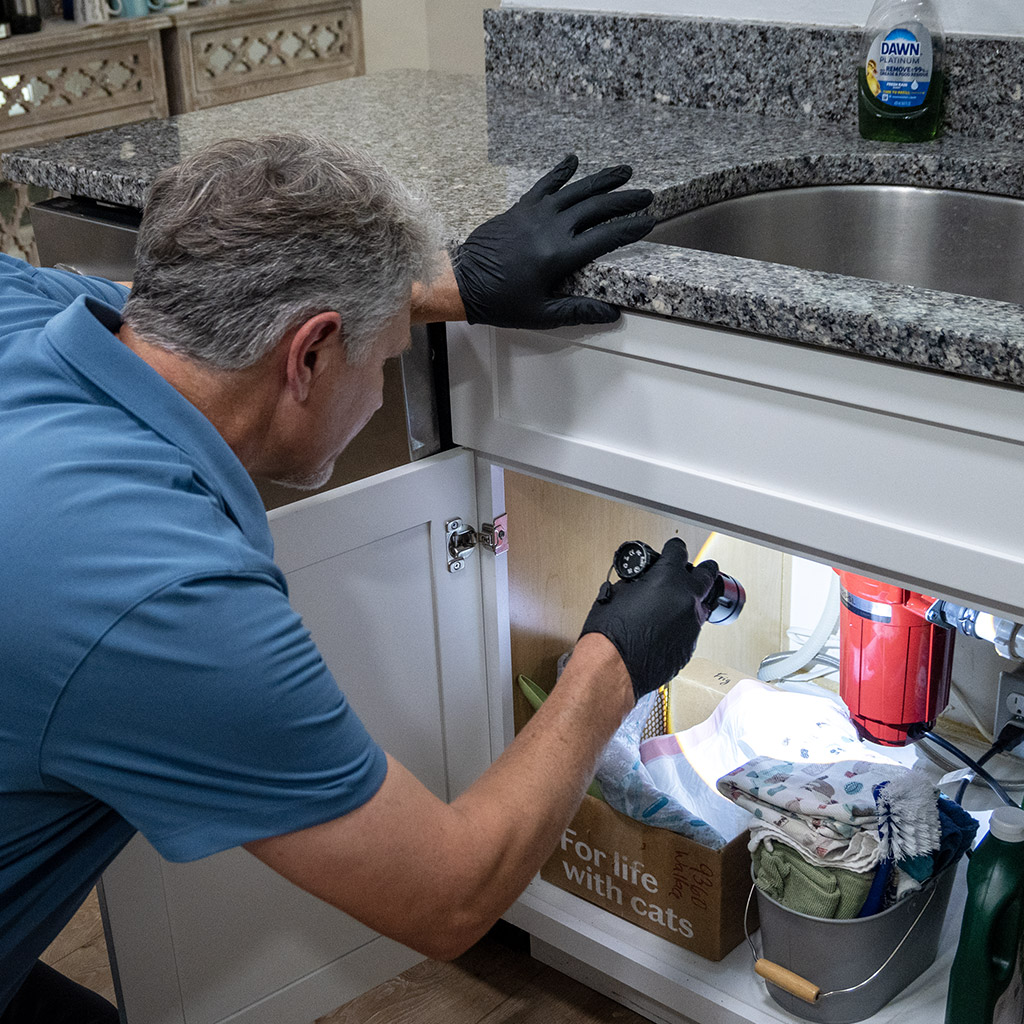
A whole-home mold inspection, not a walkthrough.
Every space is assessed.
If water has a way in, there can be mold. Kit checks the roof, gutters, drainage, and grading to make sure there are no paths for water intrusion. Every accessible interior space is then assessed, including attics, basements, and crawlspaces. The HVAC system is also checked. He uses meters, cameras, and scopes to determine if sampling needs to be taken to complete the story. The report includes an IICRC remediation protocol if one is needed.
Exterior assessment
Satellite review pre-visit, grading, drainage, foundation, siding, roof, water intrusion risk points.
Interior room-by-room
Every accessible space including attics, crawlspaces, utility rooms, garages, & HVAC systems.
Tools on hand
Moisture meters, thermal imaging, borescope, Instascope, particle meters, VOC meters, cameras, flashlight.
Written report
Photos, moisture readings, findings sorted by status, IICRC protocol when remediation is needed.
30-minute consult
Scheduled call after you receive the report. Kit walks through findings and maps next three actions.
Air and surface sampling
Lab analysis only when findings warrant it. No upcharges for samples that don’t add information.
No more waiting weeks for your report.
Findings are delivered within days, including the IICRC remediation protocol when mold removal and repairs are needed.
The most common reasons to have an inspection.
Any one of these is a good reason to book.
- There is visible mold, a musty smell, or past water damage that wasn’t completely resolved.
- People in your home are experiencing unexplained symptoms, from fatigue, brain fog, sinus issues, and sleep disruption, to more serious concerns like vertigo, tinnitus, autoimmune issues, and even cancers.
- An incomplete or failed remediation that didn’t improve symptoms for people in your home.
- You want a baseline assessment because you don’t want hidden mold problems to sneak up on you.
Air, surface, & dust sampling.
Used specifically and deliberately to determine what mold species are in your home.
All sampling is done at cost.
Air sampling is used in specific situations to determine what is floating around in the air you breathe. The spore trap is placed in particular areas. Center-of-room placement misses the patterns we look for. An outdoor sample is always collected to use as a control, so you can compare the indoor air with what is outside.
ERMI (Environmental Relative Moldiness Index) is a dust sample that measures 36 mold species via MSqPCR. Kit uses it as a way to screen the home to determine which mold species are present. Read the ERMI guide if you want to collect your own sample.
Surface sampling is used when there is visible microbial growth and we need to determine what the species is.
Kit always discusses the mold sampling plan before he collects the samples. He doesn’t use excessive sampling as a way to skip the work needed as part of a thorough inspection. We also don’t mark up our mold lab sampling prices as a way to make extra money. If Kit says you need a sample, you can trust it.
Post-remediation verification.
Make sure the mold is gone before you rebuild.
Every remediation project needs a third-party Post-Remediation Verification (PRV) performed by someone who has no financial tie to the cleanup crew. The PRV assessment is very similar to the initial inspection, focusing on the area being remediated.
A PRV pass means the remediator did the job. A PRV fail means the project continues. Either outcome protects the homeowner. Skipping the PRV can be a very costly mistake in the long run.
Quoted up front. No surprises.
Pricing reflects how long Kit expects the inspection to take.
Pricing is based on many different factors, but it comes down to how long Kit expects the inspection to take. Things like square footage, the number of bathrooms, whether there is a crawlspace or finished basement, and the number of HVAC systems are considered. Deb will ask you about your home when you call so she can create a quote.
The only additional charge may be for mold lab sampling, which isn’t always required, and you always have the option to decline.
How to prepare the home.
Forty-eight hours of simple steps so the readings tell the real story.
- No detailed cleaning. We measure the home as you live in it. Scrubbing baseboards or HVAC returns the day before erases the findings we need.
- No candles, diffusers, or plug-ins. For 48 hours. These mask VOC readings and give false-negative air quality results.
- HVAC running normally. Same thermostat schedule, same fan mode. We want to see the system as it actually runs.
- Windows closed. For 12 hours before the visit so indoor air reaches its typical concentration.
- Provide access. To HVAC closets, attic hatches, crawlspace, water heater, electrical panel, and any area you want specifically inspected.
- Pets & Kids secured. We work more efficiently and your family is less stressed.
- Gather documents. Any prior inspection reports, ERMI results, EMMA results, or remediation paperwork. Kit reads everything that came before.
Ready when you are.
Book an inspection, schedule a virtual consult, or request more information. Deb handles the scheduling so there’s a human at the other end of the phone.